Japan Trip
Japan planning
Around March 2025, we started thinking about our next big trip.
The initial dilemma was Japan vs South Korea.
Each of us had a different reason pushing toward Japan:
- I wanted to visit Hiroshima
- The kids wanted Universal Studios Japan
- My wife wanted to experience the cherry blossom season
Japan quietly won the family vote.
The bigger constraint, however, was school schedules. With annual exams in April, the only realistic travel window was May. That meant we would likely miss peak cherry blossom season — but we accepted the trade-off.
Travel dates were finally fixed: May 9th to May 15th 2025.
Booking flights
We flew Malaysia Airlines via Kuala Lumpur.
For the first time, I booked international tickets through a third-party site (Trip.com) instead of booking directly with the airline. The price difference was significant enough to try it — and we managed to get noticeably reduced fares compared to airline websites.
This was a small but interesting shift in how we planned travel.
Sometimes experimenting with booking platforms pays off.
The visa process felt very similar to the Schengen process, with quite a bit of documentation involved. I’ll write a separate post explaining the full process soon. Thankfully, we received our visas within just 5 days of applying through a travel agency.
Day 1
We landed at Narita International Airport, Tokyo around 6:00 p.m.
Immigration was surprisingly smooth. Before travelling, I had already completed the required arrival formalities online and generated QR codes for both immigration and customs. This saved time at the airport.
If you don’t do this in advance, you’ll receive paper forms on the flight a few hours before landing and will need to fill them manually. Completing it online is clearly the easier option.
After clearing immigration and customs, we headed outside where our pre-booked Klook taxi was waiting. After a long travel day, this was the easiest option instead of figuring out trains and transfers with luggage.
We reached our hotel in Tokyo, checked in, and decided to take complete rest for the evening.
Japan had officially begun — quietly, efficiently, and without friction.
Day 2: Mount Fuji — precision travel in action
We started the day early and had the hotel buffet breakfast — one of the biggest advantages of choosing hotels over Airbnb during Japan travel.
We had booked a Mount Fuji day tour via Klook and needed to reach a nearby pickup point. We almost cut it close on time and ended up booking an Uber. One thing that stood out immediately: Tokyo taxis are exceptionally clean and well maintained though expensive.
Soon we were on the tour bus with a guide, heading out of Tokyo.
Hakone Shrine — the first stop
Our first destination was Hakone Shrine, set beside a lake with calm mountain views. It was a peaceful introduction to the day — quiet, scenic, and very different from the city.
Oishi Park — Mount Fuji finally appears
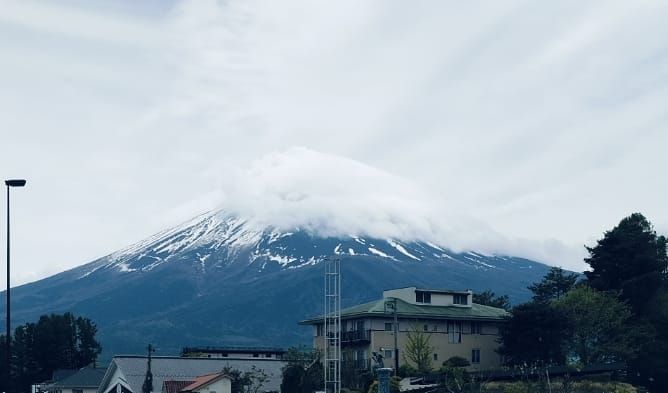
We then headed toward the Mount Fuji viewing area, stopping at Oishi Park, which was full of seasonal flowers. We had lunch here with Mount Fuji in the background — one of those postcard moments you hope the weather allows.
Japan’s reputation for discipline and punctuality became very real during this tour. Timings were precise to the minute. The guide repeatedly reminded everyone to return on time — the bus would wait only a few minutes before leaving.
It’s not a warning — it’s simply how things work.
The Lawson store viewpoint
We stopped at the famous Lawson convenience store viewpoint, known for its clear view of Mount Fuji. We were lucky — the mountain was not covered in mist, and the view was crystal clear.
We also visited a street with an antique watch shop known for another clean Fuji viewpoint — small, simple stops that added to the experience.
By late afternoon, we began the return journey to Tokyo.
My wife loved the day, the kids enjoyed it, and I was quietly balancing travel with tracking news from home — a reminder that travel never fully disconnects you from real life.
Mount Fuji delivered exactly what we hoped for:
clear skies, structured travel, and moments that felt perfectly timed.
Evening: Tokyo Tower (an unplanned)
We returned to the hotel earlier than expected, and on the spot decided to step out again.
We quickly booked Tokyo Tower tickets via Klook and headed there in the evening.
Tokyo Tower is often described as a replica inspired by the Eiffel Tower, and after visiting Paris earlier in the trip, the comparison felt interesting rather than repetitive.
The queues were long but extremely well organised, moving steadily without chaos — something we were already starting to recognise as a pattern in Japan.
We returned to the hotel around 10:00 p.m., ending a long but fulfilling second day.
Two days in, Japan already felt efficient, structured, and quietly impressive.
Day 3: Osaka — aquariums, rain and city lights
We flew from Tokyo (Haneda Airport) to Osaka on Japan Airlines and reached around noon.
From the airport, we took a pre-booked Klook taxi to our hotel, checked in, and headed out again in the evening to explore Osaka.
Osaka Aquarium — a highlight for the kids
Our first stop was the Osaka Aquarium, booked via Klook.
The aquarium was beautifully organised and easy to navigate, with clear signage guiding visitors through each section. The kids were especially excited to see the penguins, and some of the massive tanks felt surreal — enormous aquariums showcasing a wide range of ocean species in one continuous viewing path.
It felt well designed, immersive, and surprisingly calming.
Umeda Sky Building — rain and quick views
Next, we visited the Umeda Sky Building observatory. Unfortunately, it started raining while we were there, so we couldn’t spend much time at the top. Still, the short visit felt worth it for the city views.
We also picked up customised Osaka-shaped keychains with personalised text — small souvenirs that felt more meaningful than generic gifts.
Dinner and return
For dinner, we went to "PARIWAR Indian Restaurant", a comforting break from travel food, and then headed back to the hotel.
All transport in Osaka was via Uber taxis, which were consistently available within minutes — clean, reliable, and easy to use.
Day three felt slightly rushed due to travel and weather, but still packed with memorable moments.
Day 4: Universal Studios Japan — lessons from Disneyland applied
This day was dedicated entirely to Universal Studios Japan.
After our experience at Disneyland Paris, I made one important decision in advance:
book Express Entry.
It turned out to be the right call.
We chose an Express Pass covering four major rides, based on what the kids wanted most:
- A space-themed ride
- The Harry Potter ride
- Jurassic Park ride
- A high-speed roller coaster
The park was energetic, colourful, and extremely well organised. Express Entry saved hours of waiting and made the day far more enjoyable.
The unplanned queues
Of course, not everything was pre-planned.
The kids wanted to try the Jaws ride, which wasn’t included in our Express Pass. The queue was about 45 minutes, but we decided to go ahead anyway.
Later, the kids and my wife went for the Minions ride, while I took a short break in the park — a much-needed pause in an otherwise high-energy day.
We had lunch and snacks inside the park and stayed until about 5:30 p.m.
A fun highlight of the day:
My wife won a soft toy dog in a ball-throwing game — a small but memorable victory that the kids loved.
Universal Studios was busy, energetic, and full of excitement — exactly the kind of day the kids had been waiting for.
Day 5: Kyoto — expectations vs reality
We booked a Kyoto day tour via Klook.
The day before, the guide added all participants to a WhatsApp group, sharing pickup details and seat assignments — a small but very organised touch.
We reached the pickup point and boarded the bus early in the morning.
Nara Deer Park — a playful start
Our first stop was Nara Deer Park, where visitors can feed the deer.
It was a fun and slightly chaotic experience. The deer are friendly but persistent — they often assume wallets, bags, or clothing contain food and try to grab them. Once you understand this, the experience becomes enjoyable.
Overall, it was memorable and fun for the kids.
Fushimi Inari Shrine — endless torii gates
Next, we visited Fushimi Inari Shrine, famous for its hundreds of identical red torii gates forming long walking paths.
It was a hot day, and the walking made it feel more tiring than expected. Still, the visual experience of the endless gates was unique and unmistakably Japanese.
Arashiyama Bamboo Forest & the romantic train
We then visited the Arashiyama Bamboo Forest, which involved more walking but was peaceful and scenic.
After that, we boarded the Sagano Romantic Train, a slow scenic train ride through the valley.
This part carried a small disappointment.
My wife had hoped to see cherry blossoms, but by May the season had already passed. In March, the landscape would likely have looked very different — but May was the only travel window possible due to school schedules.
Day 6: Hiroshima — history, silence and perspective
This was the day I had personally been waiting for.
We had booked a Hiroshima day tour via Klook. One important factor while choosing the hotel in Osaka was proximity to the Shin-Osaka Station, since the day involved travel by Shinkansen (bullet train).
At the station, the tour operators were waiting for us and handed over the train tickets. Soon we boarded the bullet train — fast, smooth, and incredibly efficient.
From Hiroshima station, we joined the operator’s tour bus and headed to the Hiroshima Peace Memorial Park.
Atomic Bomb Dome — standing witness
The first sight that stays with you is the Atomic Bomb Dome, the preserved remains of a building that survived the bombing.
Seeing it in person is very different from seeing it in books or documentaries.
It doesn’t feel dramatic. It feels quiet.
Peace Memorial Museum
We then visited the Peace Memorial Museum, where photographs and personal stories of victims are displayed.
This part of the day was heavy and emotional.
It shifts the tone of the entire trip — from sightseeing to reflection.
For me, this was the most meaningful part of the Japan journey. My wife and kids were also deeply engaged, even if in quieter ways.
Miyajima Island and Itsukushima Shrine
After lunch at an Indian restaurant, we took a ferry to Miyajima Island to visit the famous shrine.
The island was peaceful and scenic — a gentle contrast after the emotional weight of Hiroshima.
By evening, the tour concluded.
Japan ended not with excitement, but with reflection — which felt appropriate.
Return home
The next morning, we took an early flight from Osaka back to Hyderabad via Kuala Lumpur, bringing the Japan trip to an end.
Japan had delivered efficiency, discipline, and moments of quiet reflection — a very different rhythm from our previous travels.
Expenses
Japan turned out to be one of our more expensive Asian trips, mainly because of hotels and theme park experiences.
Here’s the approximate breakdown:
- Flights (India ⇄ Japan via Kuala Lumpur): ~₹2.0 lakh
- Hotels: ~₹1.1 lakh
Japan hotels are compact and most rooms accommodate only 2 people, so we had to book two rooms everywhere. - Tours & activities: ~₹2.0 lakh
(Mount Fuji tour, Kyoto tour, Hiroshima tour, Universal Studios with Express Pass, Osaka attractions...) - Food, taxis & local expenses: ~₹30,000
👉 Total Japan trip cost ≈ ₹5.4 lakh
Japan is not cheap, but the costs are predictable and the experience quality is very high.
Perfect — this becomes the Japan tips & takeaways section to close the Japan series.
Japan tips & takeaways
A few practical things worked really well for us and are worth following.
Connectivity & money
- As always, I used the Airtel international roaming pack, which worked reliably.
- I carried about ¥70,000 (≈ ₹40,000) in cash.
- I also used a multi-currency forex card preloaded with Japanese Yen, which worked smoothly.
One surprising fact:
Japanese Yen felt cheaper than INR, which psychologically makes spending feel lighter.
Precision matters in Japan
Japan runs on discipline and punctuality.
Tour buses and trains operate to the minute.
If the bus says departure at 2:00 PM, it means 2:00 PM — not 2:05.
Being late can literally mean being left behind.
Traffic signals & pedestrian priority
Japan has a very high number of traffic signals, and vehicles almost always give priority to pedestrians.
This is great for safety and walkability, but it also means road travel takes longer than expected, even for short distances within the city.
If you’re booking taxis for:
- tour pickups
- train stations
- airport transfers
Always book them 10–15 minutes earlier than you think you need.
Small delays at multiple signals can easily add up.
Trash bins are rare
A surprising adjustment for Indians:
- Public trash cans are rare
- You often have to carry your trash with you until you find a bin.
This is one of the reasons Japan feels incredibly clean.
Food & convenience
We carried some ready-to-eat meals and snacks, which helped occasionally.
But honestly, Japan makes food and drinks extremely accessible:
- Vending machines are everywhere
- Water, juices, soft drinks — available on almost every street
You never feel stuck without options.
Cherry blossom timing matters
If cherry blossoms are important to you, timing is critical.
Best time to visit:
Late March → Early April
We travelled in May due to school schedules, which meant we missed the blossoms.
Next time, we would definitely plan around that season.