Maldives..
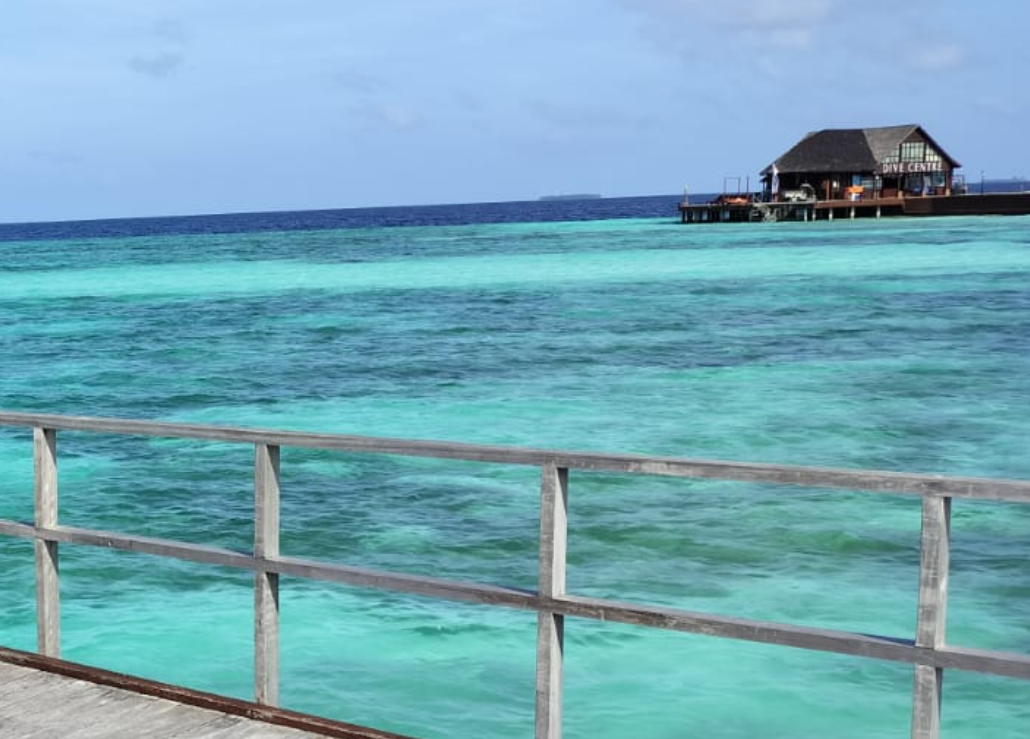
Maldives was our second international family trip, done in June 2024, from June 14 to June 17. It was a short stay — three nights — and very different in intent from Bali.
This trip was planned barely ten days in advance. Our kids’ summer holidays were coming to an end, and by then our Schengen visa had already been approved (details for another post). Maldives felt like the easiest international escape at short notice — close to India, visa-free, and logistically simple.
Entry formalities and flights
Maldives is visa-free for Indian tourists. On arrival, you’re stamped with a 90-day tourist permit, provided you show valid accommodation details.
One important requirement is the Traveller Declaration, which must be filled online at the official government site:
👉 https://imuga.immigration.gov.mv/traveller/declaration
Once submitted, you receive a QR code. Carry a printed copy. These QR codes are scanned at the airport. You need to fill for entry and exit. If you don’t have it ready, you’ll be asked to fill it on the spot — which means depending on airport internet, something best avoided. Be ready with accommodation details/proof at the immigration counter.
Always use government websites only. There are proxy sites that look legitimate and may ask for payment or personal details. Avoid them completely.
We flew IndiGo, with a total flight cost of around ₹85,000. There were no direct flights from Hyderabad at that time, so we routed via Bangalore.
- Hyderabad → Bangalore (domestic)
- Bangalore → Maldives (international)
Passport control happens at the last Indian airport you depart from — in our case, Bangalore. This often confuses people. From Hyderabad to Bangalore, we were domestic passengers; immigration happened only in Bangalore.
IndiGo handled luggage seamlessly. Even though you change terminals (domestic to international), bags are taken care of, and there’s a dedicated bus every 10–15 minutes between terminals.
Resort, transfers, and arrival
We stayed at Sun Siyam Olhuveli Island, a private resort island.
The only way to reach it is via the resort speedboat, which must be booked separately. For four people, the round-trip transfer cost around USD 500.
Our accommodation was split:
- 1 night in a Water Villa (without pool)
- 2 nights in a Beach Villa with private pool
Total accommodation cost for three nights was around ₹1.3 lakh INR.
We arrived at the resort around 4:00 p.m. and were greeted warmly. Day one was intentionally light — resting, exploring the villa, and letting the kids and my wife enjoy the water villa.
The beach, the water, and the multiple shades of blue are surreal. It’s not scenery you analyse — it’s scenery you absorb.
Life on the island
Unlike Bali, Maldives doesn’t reward movement. It rewards staying still.
Activities are booked through the resort app, but many were cancelled due to low turnout. At that time, Indian tourist inflow was visibly low — immigration queues were almost empty.
On Day Two, we did kayaking. It was extremely hot, and my younger daughter found it uncomfortable, which is expected in June. Rain would appear briefly over small patches — sometimes just one cluster of villas — and disappear quickly. In June, rain wasn’t a problem.
We mostly avoided restaurants during the day. We carried ready-to-eat meals (pouch-based meals that just need hot water). The kettle in the room was sufficient. This kept costs under control.
On Day Three, we did jet skiing and a banana ride. Afternoons were spent resting — the heat dictates the rhythm. Evenings were for slow walks around the island. We had dinner once at the Indian restaurant, which felt familiar and comforting.
Every morning, the breakfast buffet was excellent — extensive, well-managed, and surprisingly Indian-friendly. Dosa, idli, and plenty of vegetarian options were available.
Island logic ..
Maldives is not designed for spontaneous island hopping.
Private resort islands are self-contained. Moving between islands requires prior planning and often expensive transfers. While local islands like Maafushi exist (connected by government ferries and far cheaper), switching mid-stay isn’t straightforward unless planned in advance.
We briefly considered visiting Maafushi but decided against it. The restricted nature of private islands is not an issue— it’s the design.
You arrive, and then you stop.
Costs, currency, and essentials
- Maldives runs almost entirely on USD.
- Carry USD cash — it works everywhere.
- Local currency exists, but tourists don’t need it.
- No need for a local SIM — resort Wi-Fi and mobile international roaming is sufficient.
- Bottled water is provided and refilled free of charge.
- Mini-bar snacks and drinks are chargeable (some welcome drinks may be complimentary).
- Try sea plane transfer if possible, though bit expensive.
There was no strict budget for this trip. We knew Maldives would be expensive. Beyond accommodation, food, and activities, expenses were predictable. Total cost were around 2.3L.
Travel insurance is essential.
It’s not mandatory at immigration, but that’s not a reason to skip it. Medical care or evacuation in Maldives is extremely expensive. Always carry insurance.
Maldives is for..
It’s about stillness and containment.
For couples, it’s ideal.
For families, it works if children enjoy water sports.
For explorers, it can feel restrictive.
Compared to Bali, Maldives ranks higher for pure waterscape, but lower for variety and movement.
Closing thought
Maldives reminds that — some travel is about quietly reducing noise.
That contrast is what makes Maldives worth visiting — especially because it’s so close to India.
It’s not a place you rush through.
It’s a place you arrive at — and then stop.